
Ras Al Khaimah is a great choice for travellers who want more variety than a typical beach break. In one emirate, you can spend the morning in the Hajar Mountains, relax by the coast in the afternoon, explore a historic village or fort, and enjoy a quiet dinner by the water in the evening. It suits families looking for outdoor activities, couples planning a relaxed weekend, adventure seekers heading to Jebel Jais, and UAE residents wanting a short road trip away from city traffic.
The main question is usually how to plan the trip. Should you stay near the beach, in the city, or closer to the mountains? How many days do you need? Which activities need advance booking? This Ras Al Khaimah holiday guide answers those questions with practical advice on major attractions, family activities, mountain experiences, beaches, cultural sites, transport, and a simple three-day itinerary. It also includes planning tips that can help you avoid peak-hour drives, last-minute ticket issues, and rushed schedules.
Ras Al Khaimah offers a different side of the UAE. While Dubai is known for its skyline and large entertainment venues, Ras Al Khaimah is better known for mountains, beaches, desert landscapes, mangroves, heritage sites, and outdoor adventure.
It is a good destination for:
A well-planned Ras Al Khaimah holiday can be as active or as relaxed as you want. The key is choosing your accommodation area based on the experiences that matter most to you.
Ras Al Khaimah also works well as part of a wider Northern Emirates road trip. Travellers who want to combine mountain scenery and heritage attractions with slower coastal time can include a beach resort in Umm Al Quwain UAE before or after their Ras Al Khaimah plans.
Jebel Jais is the UAE’s highest mountain and one of the main reasons many visitors travel to Ras Al Khaimah. The drive itself is part of the experience, with wide mountain roads, viewpoints, and changing scenery as you climb higher.
Visitors can enjoy:
Mountain activities often have age, height, weight, health, and weather requirements. It is best to confirm these directly with the official operator before booking, especially if travelling with children or older family members.
Jais Flight is widely known as one of the world’s longest zipline experiences. It is designed for thrill seekers and must be booked in advance during busy periods. If you prefer something less intense, Jais Sledder offers a mountain coaster-style ride with views over the Hajar Mountains.
Before heading up the mountain, check:
A Jebel Jais visit can take most of a day, especially when you include the drive, check-in, activity time, meals, and photo stops.
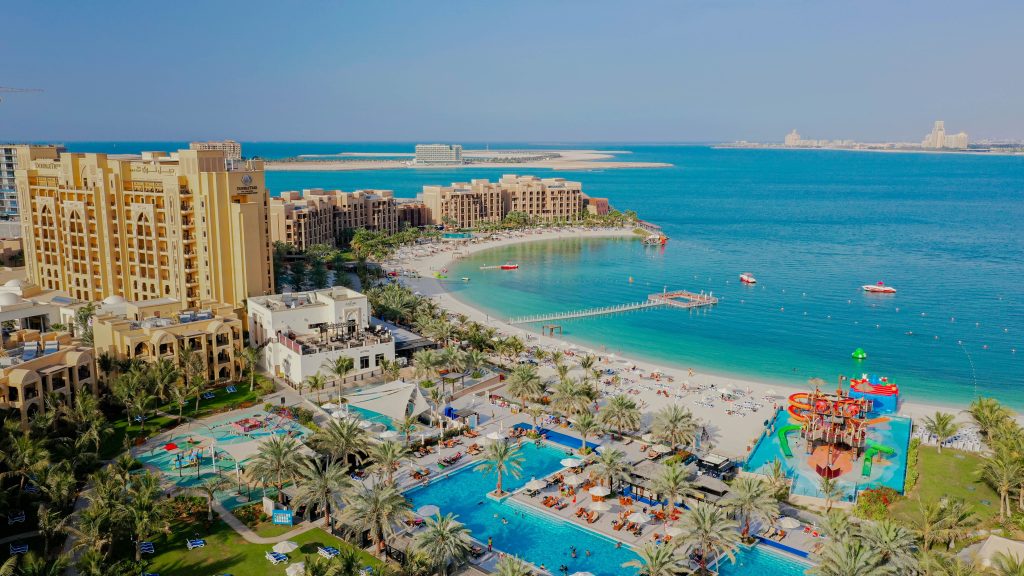
Al Marjan Island is one of the best areas for a beach-focused Ras Al Khaimah holiday. The man-made island and surrounding coastline are home to beach resorts, waterfront restaurants, cafés, and long stretches of sea views.
It is particularly suitable for:
If beach time is the main priority, Al Marjan Island is often a better base than the mountain area.
Al Jazirah Al Hamra is a historic coastal settlement that gives visitors a glimpse of life in the UAE before rapid modern development. Its old buildings, coral-stone structures, mosques, and narrow lanes make it a worthwhile stop for travellers interested in photography, history, and architecture.
Visit in the cooler part of the day and wear comfortable shoes. As with any heritage site, stay on designated paths, do not enter unsafe structures, and respect signage.
Dhayah Fort is one of Ras Al Khaimah’s most important historic landmarks. The site is known for its hilltop position and views over palm groves, plains, and the surrounding landscape.
The climb can be steep, so it may not suit everyone. Carry water, avoid the hottest part of the day, and wear footwear with a good grip. The view from the top is worth the effort for visitors who are comfortable with steps and exposed outdoor areas.
A pearl-farm tour is one of the most distinctive cultural activities in Ras Al Khaimah. It helps visitors understand the UAE’s traditional pearling heritage, which played an important role in the region’s coastal economy before oil.
Tours may include information about oyster cultivation, pearl grading, historic diving traditions, and the local marine environment. This activity is especially suitable for families, culture lovers, and visitors looking for something different from beaches and shopping.
Located in a historic fort, the Ras Al Khaimah National Museum is a useful indoor stop for those who want context before visiting the emirate’s forts, heritage villages, and archaeological locations.
It can be a good option on a hot afternoon or as part of a city-based itinerary. Check opening hours before visiting, as these may change during public holidays or special events.
The best time to visit Ras Al Khaimah is generally from October to April, when outdoor activities are more comfortable. This is the best period for mountain drives, hiking, beach walks, desert experiences, and heritage sightseeing.
This is the main outdoor season. Weekend demand is higher, especially around school holidays, Eid breaks, National Day, Christmas, New Year, and long weekends. Book activities and accommodation early.
Summer can be very hot, especially for desert and heritage attractions. Beach resorts, pools, indoor dining, and early-morning mountain visits are usually more comfortable than long midday sightseeing.
If you visit in summer:
Ras Al Khaimah is easiest to explore by car. A private vehicle or rental car gives you the flexibility to visit Jebel Jais, Al Marjan Island, heritage locations, and coastal areas without trying to match your plans to limited public transport routes.
If you are driving from Umm Al Quwain, start early when visiting Jebel Jais, particularly on weekends and public holidays. The journey involves highways and then mountain roads, so allow more time than a standard city journey. Fill up with fuel before heading towards the mountain and keep a charged phone with offline maps or navigation access.
Private transfers can be useful for families, groups, and visitors who prefer not to drive. They are also a practical option for early Jebel Jais activity slots or evening returns after a full sightseeing day.
Taxis can be suitable for short local trips around Ras Al Khaimah city and resort areas. For longer sightseeing routes, agree on a return plan in advance or book a driver for the day. Ride-hailing availability can vary by area, so do not rely on a quick pickup when visiting remote mountain or heritage locations.
Ras Al Khaimah does not have a Dubai Metro connection or an operating Metro network for local visitor travel. The Dubai Metro runs within Dubai and does not extend to Umm Al Quwain or Ras Al Khaimah.
Visitors arriving through Dubai can use the Metro for travel within Dubai—such as reaching a car-rental branch, bus connection, or meeting point—then continue north by rental car, intercity bus, taxi, private transfer, or organised tour. For a Ras Al Khaimah holiday, plan your main transport before leaving Dubai rather than expecting metro access at your destination.
Intercity buses can be a lower-cost option between Dubai and Ras Al Khaimah, but they are less convenient for reaching Jebel Jais, beaches, remote heritage attractions, and activity venues. If you choose the bus, combine it with local taxis or pre-booked tours and allow extra time.
Where you stay should match your itinerary. Ras Al Khaimah has options around beaches, waterfront districts, the city centre, and mountain routes, while Umm Al Quwain can suit travellers planning a wider Northern Emirates road trip.
Area | Best for | What to expect |
Al Marjan Island | Beach holidays, couples, families | Waterfront dining, beach access, resort areas, slower evenings |
Mina Al Arab | Nature and waterfront stays | Mangrove-side views, restaurants, walking areas, family-friendly settings |
Ras Al Khaimah City | Heritage and practical access | Museums, local dining, shopping, and city services |
Jebel Jais area | Adventure-focused trips | Early starts for mountain activities and scenic drives |
Umm Al Quwain | Northern Emirates road trips | A coastal stop before or after a dedicated Ras Al Khaimah visit |
For families combining a coastal break in Umm Al Quwain with a separate Ras Al Khaimah outing, a family resort in Umm Al Quwain may be a practical option for a relaxed stay before or after a full day of sightseeing.
Start with a relaxed arrival near Al Marjan Island or the coast. Spend the afternoon at the beach or pool, then enjoy an early evening walk and dinner by the water.
This first day is intentionally light. It gives you time to recover from the drive and avoids trying to fit too much into your arrival day.
Leave early for Jebel Jais. If you have booked an activity, follow the operator’s check-in time carefully. After your experience, stop at a viewpoint, have lunch, and allow enough time to drive back before late evening.
Do not add a major heritage visit on the same day unless you have plenty of energy and a flexible schedule.
Spend the morning visiting Al Jazirah Al Hamra or the National Museum. In the afternoon, consider a pearl-farm tour, Dhayah Fort, or a final beach stop before travelling home.
This balance gives you a clear mix of coast, mountains, and culture without turning the holiday into a rushed checklist.
Some Ras Al Khaimah experiences are much easier to enjoy when booked before you arrive.
Consider booking these in advance:
Always check the operator’s latest cancellation, weather, age, and safety policies before paying.
A few simple decisions can make a major difference to your trip.
Yes. Ras Al Khaimah is worth visiting if you enjoy a mix of beaches, mountains, heritage, nature, and adventure activities. It offers a slower pace than Dubai while still providing a wide choice of resorts, restaurants, family activities, and outdoor experiences.
Two to three days is enough for a first visit. A two-day trip works well for a beach stay and one Jebel Jais day. Three days allows time for heritage attractions such as Al Jazirah Al Hamra, Dhayah Fort, the National Museum, or a pearl-farm experience.
Yes. You can drive to Jebel Jais for viewpoints and mountain scenery without booking a zipline or sledder activity. However, adventure activities need a separate booking and may have safety requirements.
Yes. Families can choose from beach resorts, pools, water activities, museum visits, mountain viewpoints, heritage sites, and pearl-farm experiences. For younger children, choose gentler activities and check height or age requirements before booking adventure attractions.
November to March is especially popular because the weather is usually more comfortable for beaches, outdoor dining, mountain drives, and walking. October and April can also be good, although daytime temperatures may be warmer.
A car is strongly recommended if you want to explore beyond your resort or the city centre. It gives you easier access to Jebel Jais, beaches, heritage attractions, and remote activity locations. Visitors without a car should arrange transfers or join organised tours.
No. Ras Al Khaimah does not currently have a Metro system, and Dubai Metro services do not extend to Ras Al Khaimah or Umm Al Quwain. Use a car, private transfer, intercity bus, taxi, or organised tour for travel in the Northern Emirates.
Unlock special offers available only when you book directly with us.
We respect your privacy. Your details will only be used to send the offer and booking link. No spam – unsubscribe anytime.
BEST RATES GUARANTEED
BEST RATES GUARANTEED